1. Chronic Kidney Disease (CKD)
Chronic Kidney Disease is the most common form of kidney disorder. It refers to a gradual loss of kidney function over time — often caused by long-term conditions like diabetes or high blood pressure.
Causes:
- Diabetes
- Hypertension
- Glomerulonephritis
- Polycystic kidney disease
- Recurrent kidney infections
Symptoms:
- Fatigue
- Swelling in legs, ankles, or feet
- Nausea
- High blood pressure
- Frequent urination at night
Treatment:
- Blood pressure control
- Diabetes management
- Diet changes
- Medications to reduce protein in urine
- Dialysis or kidney transplant in advanced stages
2. Acute Kidney Injury (AKI)
Acute Kidney Injury, also known as acute renal failure, is a sudden loss of kidney function. It can develop within hours or days and is often reversible if treated promptly.
Causes:
- Severe dehydration
- Infections
- Blood loss
- Toxic reactions to medications
- Blocked urine flow
Symptoms:
- Decreased urine output
- Swelling in legs or ankles
- Confusion
- Shortness of breath
- Fatigue
Treatment:
- Treat the underlying cause (e.g., infection or dehydration)
- Temporary dialysis in severe cases
- Fluid and electrolyte management
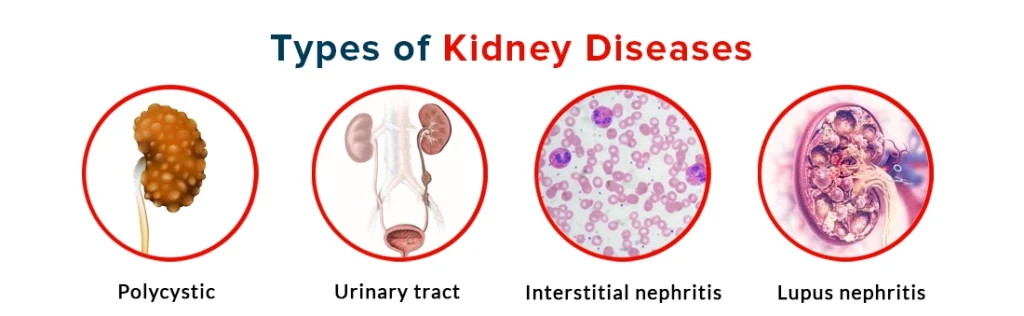
3. Polycystic Kidney Disease (PKD)
Polycystic Kidney Disease is a genetic disorder where fluid-filled cysts grow in the kidneys, leading to enlarged kidneys and reduced function over time.
Causes:
- Inherited genetic mutation (Autosomal Dominant or Recessive)
Symptoms:
- High blood pressure
- Back or side pain
- Enlarged abdomen
- Blood in urine
- Kidney stones
- Kidney failure (in advanced stages)
Treatment:
- Blood pressure control
- Pain management
- Antibiotics for infections
- Dialysis or transplant if kidneys fail
4. Glomerulonephritis
Glomerulonephritis is an inflammation of the glomeruli — the tiny filtering units inside the kidney. It can be acute or chronic and can lead to serious damage if untreated.
Causes:
- Autoimmune diseases (e.g., lupus)
- Post-infection inflammation
- Certain medications
- Genetic conditions
Symptoms:
- Blood in urine
- Foamy urine (due to protein)
- Swelling in face, hands, feet
- High blood pressure
Treatment:
- Immunosuppressive drugs
- Blood pressure medications
- Dietary adjustments
- Dialysis in severe cases
5. Kidney Stones
Though not a disease of the kidney tissue itself, kidney stones are solid deposits that form inside the kidneys and can block the urinary tract, causing intense pain.
Causes:
- Dehydration
- High-sodium diet
- Excessive calcium or oxalate
- Family history
Symptoms:
- Sharp pain in back or side
- Blood in urine
- Painful urination
- Nausea or vomiting
Treatment:
- Drinking plenty of water
- Medications to help pass the stone
- Shock wave therapy
- Surgery in severe cases
6. Urinary Tract Infections (UTIs) Leading to Kidney Infection (Pyelonephritis)
A urinary tract infection can travel to the kidneys, causing pyelonephritis, a serious infection that needs immediate treatment.
Causes:
- Untreated bladder infection
- Urine reflux
- Kidney stones
Symptoms:
- Fever and chills
- Painful urination
- Back or flank pain
- Cloudy or foul-smelling urine
Treatment:
- Antibiotics
- Hospitalization in severe cases
- Pain management
7. Nephrotic Syndrome
Nephrotic Syndrome is a condition where the kidneys leak too much protein into the urine due to damage in the glomeruli.
Causes:
- Glomerulonephritis
- Diabetes
- Lupus
- Certain medications
Symptoms:
- Severe swelling (edema)
- Foamy urine
- Weight gain
- Fatigue
- High cholesterol
Treatment:
- Steroids or immunosuppressants
- Diuretics to reduce swelling
- Dietary changes
- Treating the underlying cause
8. Diabetic Nephropathy
This is a kidney disease caused by long-term diabetes. Over time, high blood sugar levels damage the kidneys’ filtering units.
Symptoms:
- Protein in urine
- Swelling
- High blood pressure
- Gradual decline in kidney function
Treatment:
- Tight blood sugar control
- ACE inhibitors or ARBs
- Low-protein diet
- Dialysis or transplant in end-stage
9. Lupus Nephritis
Lupus Nephritis is a kidney inflammation caused by systemic lupus erythematosus (SLE), an autoimmune disease where the immune system attacks its own tissues.
Symptoms:
- Blood or protein in urine
- Swelling in legs, ankles
- Joint pain (lupus-related)
- Skin rashes
Treatment:
- Immunosuppressive therapy
- Corticosteroids
- Kidney-friendly diet
Conclusion
Kidney diseases can vary widely in their causes and severity, from mild infections to life-threatening chronic conditions. Early detection and proper management are crucial to preserving kidney function and improving quality of life.
If you experience symptoms like swelling, fatigue, changes in urination, or high blood pressure, consult a doctor or nephrologist promptly. Regular check-ups and healthy lifestyle choices can go a long way in preventing or slowing down kidney disease.
Tags: Types of Kidney Diseases, CKD, Polycystic Kidney Disease, Glomerulonephritis, Nephrology, Kidney Stones, Lupus Nephritis, Kidney Health
Would you like a shorter version for social media, or a printable version as a PDF?